Best Practices
Rooftop Solar Best Practices: How to Avoid Costly Installation Mistakes
By Rajesh Iyer (Technical Audit Director)
August 4, 2026
5 min read
A solar rooftop system is designed to generate clean electricity under extreme outdoor weather for 25 years. However, if the system is installed using cheap materials or poor workmanship, it can lead to massive power generation losses, roof leakages, electrical shocks, or even fires.
To protect your investment, make sure your installer follows these four installation best practices.
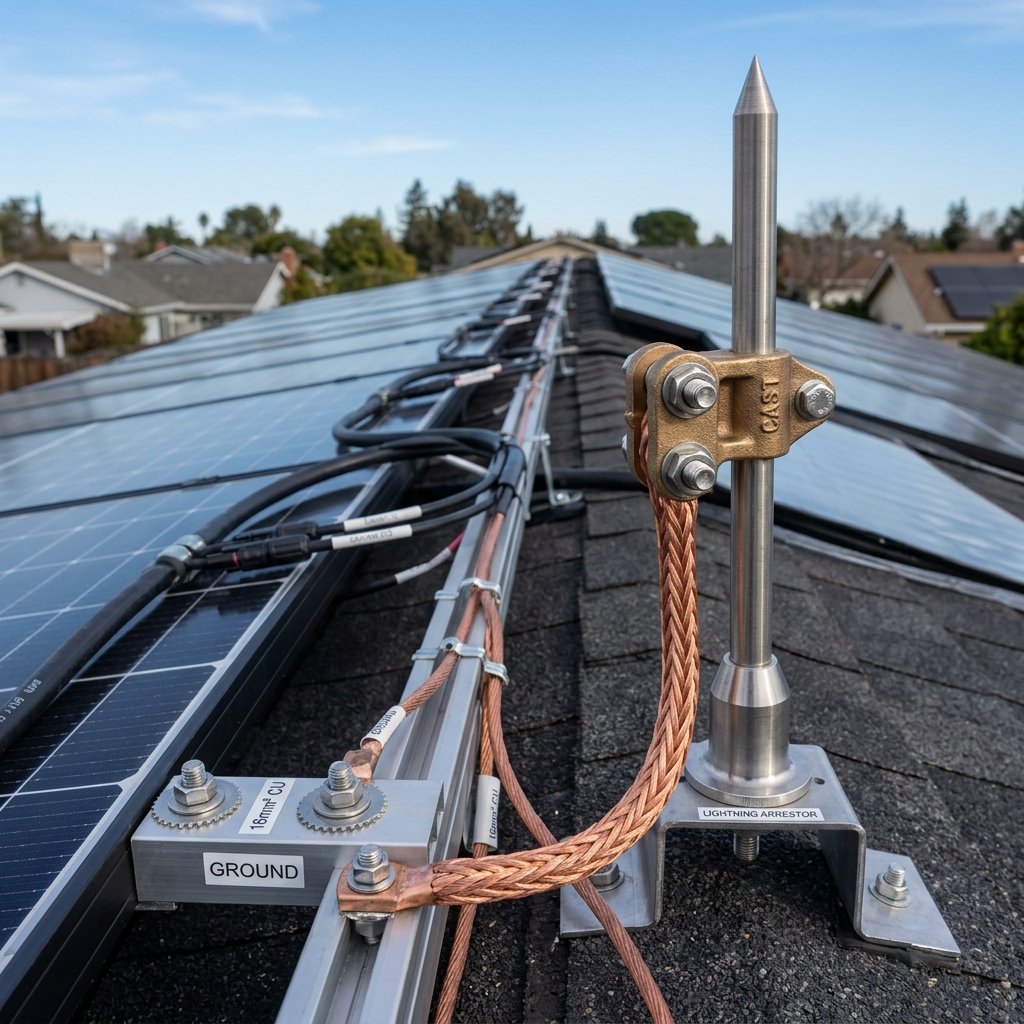
Professional grounding lightning arrestor configuration on residential solar rooftop
1. Structural Wind Load Engineering Rooftop solar panels act like giant sails. During storms or cyclones, high wind speeds create upward lift forces that can rip panels off the roof. - **Rust-free Structures:** Never allow installers to use cheap mild steel (MS) structures, which rust in 2 to 3 years. Insist on **hot-dip galvanized iron (GI) structures** with a coating of at least 80 microns, or anodized aluminium frames. - **Proper Anchor Ballast:** For concrete roofs, structural supports must be fixed using heavy chemical anchors or concrete ballast foundation blocks. Do not allow installers to drill holes deep into your roof slab without applying multi-layered bituminous waterproofing membranes to seal the concrete. - **Wind Speed Resilience:** In coastal areas of India (such as Gujarat, Odisha, or Tamil Nadu), the structural frame must be certified to withstand wind loads up to 150 km/h or 180 km/h. Ask your installer for the structural stability certificate signed by a civil engineer.
2. High-Quality Cabling & Conduit Protection Solar panels generate high-voltage Direct Current (DC) power. Unlike AC power, DC currents do not have a "zero-crossing" point, which means they do not self-extinguish when an electrical arc occurs. A loose DC wire is a major fire hazard. - **UV-Resistant DC Cables:** Installers must use specialized, double-insulated copper DC solar cables (usually 4 sq mm or 6 sq mm thick). Standard AC house wires will degrade under sunlight and short-circuit within a year. - **Rigid Conduits:** All DC cables running from the roof to the inverter must be protected inside **UV-stabilized rigid PVC or metal conduits**. Cables should not hang loose or touch the roof floor, where they can sit in pools of stagnant water. - **Color Coding and Labeling:** Ensure the positive and negative DC conduits are clearly labeled "Danger - High Voltage DC" to prevent accidental cutting or injury by maintenance personnel.
3. Dedicated Safety Earthing & Lightning Protection Rooftop solar systems are highly vulnerable to lightning strikes and static voltage build-up. - **Multiple Earthing Pits:** Ensure the installer digs at least **three separate earthing pits** using copper bonded electrodes and carbon chemical compounds: 1. One for the DC system (panel frames and structure). 2. One for the AC system (inverter body and distribution box). 3. One dedicated purely to the Lightning Arrestor. - Never allow installers to connect the lightning arrestor to the panel frame ground; this will redirect a lightning strike straight into your expensive inverter. - **Resistance Testing:** Ask the installer to test the earth resistance of each pit using a megger. The earth resistance should be less than 2 ohms to ensure quick safety trip operations.
4. Cleaning Access Planning Solar panels lose up to **15% to 25% of their generating efficiency** if they are covered in dust, bird droppings, or soot. Frequent washing is mandatory. - **Safety Walkways:** Ensure there is a safe walkway (at least 2 feet wide) between panel rows so you can walk and clean the modules without stepping on the glass (which creates micro-cracks that ruin the cells). - **Water Connection:** Ask the vendor to install a dedicated water pipeline and tap on the roof near the array. Running long, heavy water hoses up the stairs every week is exhausting and discourages panel cleaning. - **Safety Railings:** If panels are installed close to the roof edge or on elevated structures, safety lifelines or perimeter guardrails must be installed to protect cleaning staff from falls.
Ready to save?
Get custom engineering layouts and subsidy estimates for your concrete or metal rooftop from verified local installers.